

I was talking with a business colleague when he said, “As far as I’m concerned, it’s always about the end result. It’s always about winning.”
“So, it’s not about the process?” I challenged.
“I don’t think so,” he said.
“But isn’t it about a consistent process that produces winning results?” I asked.
His comment and his mindset challenged me.
Values matter. People matter. Integrity matters.
The end result certainly matters. Businesses must meet deadlines, serve customers, and achieve their objectives. But is the result all that matters? Success at any cost? What about the process used to achieve it? What about the people affected by that process?
And what if the result was achieved despite the process, rather than because of it?
Suppose the deadline was met and the customer was satisfied. Success was achieved.
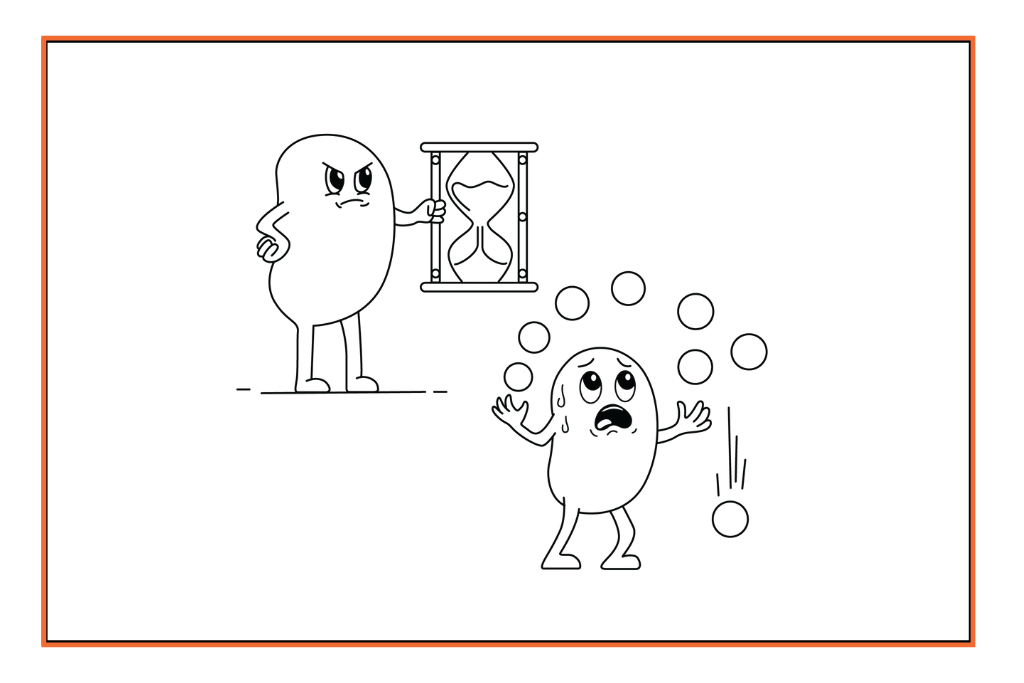
But what if, behind that successful result, employees had to chase missing information, work around conflicting instructions, make last-minute decisions without adequate authority, and absorb responsibilities that belonged elsewhere? What if winning required violating organizational values or compromising ethical standards? Could that truly be called success?
The myth behind a results-only mindset: If the result was achieved, the process must have worked.
The truth: Capable people often achieve results by compensating for broken processes.
A successful outcome does not always prove the process was effective. Sometimes it proves the people were resourceful.
The process determines whether success is repeatable
Focusing on process doesn’t mean valuing activity over accomplishment. Process is the agreed-upon path for producing a result. It determines how decisions are made, information is shared, responsibilities are assigned, and problems are resolved.
When the process is broken, resourceful people rescue the outcome. They fill gaps, anticipate problems, and protect the customer from the chaos behind the scenes.
Their competence creates a false impression. Leadership sees a completed project while employees experience the rework and exhaustion required to complete it.
Because the outcome was achieved, leaders may not examine what made the work so difficult. Exceptional effort becomes the expected standard.
That isn’t sustainable execution. It’s organizational heroics.
A results-only mindset becomes dangerous when leaders define the result too narrowly. They celebrate the visible outcome without examining what was sacrificed or created along the way.
A results-only mindset can reward the wrong behavior
When leaders evaluate success only by the outcome, they may unintentionally reward the people who compensate for problems and discourage those who expose them.
The employee who quietly compensates for every gap may be praised as a team player. The employee who questions the process may be labeled negative, resistant, controlling, or too concerned with details.
This teaches people a dangerous lesson: Fix the problem quietly, but don’t question what created it.
Over time, employees stop providing critical feedback. They continue compensating until they burn out, or they decide the problem is no longer theirs to solve.
When the organization finally experiences a visible failure, leaders may be surprised. But the breakdown didn’t begin when the result was missed. It began when people learned that producing the outcome mattered more than telling the truth about what it took.
Execution breaks earlier than leaders think
A results-only mindset concentrates on the final stage of the work: execution. But execution usually breaks earlier. The Alignment Chain illustrates the sequence:
Clarity → Conversation → Accountability → Execution
Clarity precedes conversation. Conversation creates accountability. Accountability protects execution.
Although the Alignment Chain appears linear, clarity and conversation are interdependent. We need enough clarity to begin the conversation, but the conversation tests, deepens, and sometimes corrects that clarity.
For example, executives may agree on a pathway without fully understanding the tradeoffs required to achieve the goal. As those tradeoffs become apparent, confusion develops. What presents as a clarity problem may actually be a conversational failure. Someone needs to say, “I’m confused,” “I disagree,” or “This isn’t what I thought we agreed to.” Knowing the architecture of these difficult conversations helps surface concerns before they become execution problems.
Clarity often emerges through conversation. The breakdown occurs when people are unwilling or unable to question assumptions, challenge a decision or acknowledge that clarity has weakened.
When those conversations don’t happen, accountability becomes murky. By the time the problem becomes visible in execution, people may already be operating from competing assumptions.
The missed deadline may have begun with an unclear decision. The quality problem may have started when someone didn’t feel safe enough to disagree. The exhausted employee may have been compensating for a lack of authority, resources, or direction.
The result gives leaders important evidence, but it does not provide the complete diagnosis.
Examine both the result and the process
The answer is not to choose between results and process. Leaders must pay attention to both.
Results tell us whether we achieved the objective. Process tells us whether we can achieve it again without relying on confusion, silence, exhaustion, or heroics.
After an important project, leaders can ask:
- Did we achieve the desired result?
- What worked as intended?
- Where did people have to improvise or compensate?
- What information, authority, or resources were missing?
- What depended too heavily on one person?
- What did this result cost in time, energy, or neglected priorities?
- What should we change before doing this again?
These questions are not about diminishing the accomplishment or elevating process above performance. They are about learning what actually produced the outcome.
My colleague was right about one thing: The end result matters.
But the process matters, too. The process affects the quality of the result, the cost of achieving it, and the organization’s ability to repeat it.
Leaders should celebrate successful outcomes. They should also remain curious about what those outcomes required.
Otherwise, today’s success may simply be a breakdown that capable people managed to postpone.
